==============================
2022-8-5
==============================
note
一.早测
    完成有头双向循环链表的功能
    1.创建头结点
    2.插入数据结点
    3.遍历链表
    4.销毁链表
    5.查找结点
    6.删除结点
    7.拿出结点
只写声明和实现,不用写调用(llist.c 和 llist.h)

=================================
作业
1.把这一周讲过的内容都完完整整的复习一遍
2.把三个版本的通用性强的链表重新实现一遍
3.在纸上写链表的代码
=================================
通用性强的链表
结点图
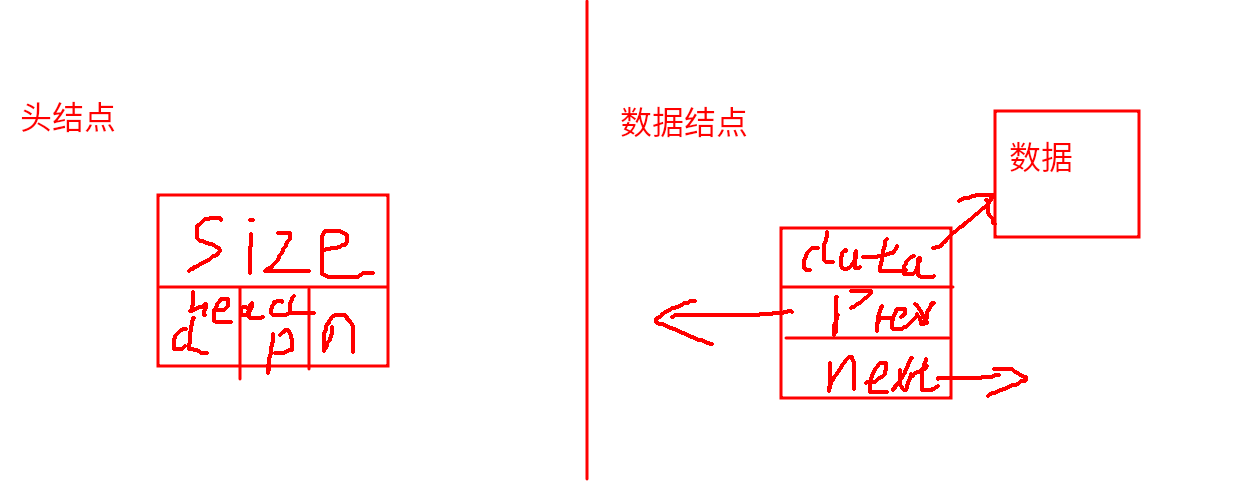
main.c
1
2
3
4
5
6
7
8
9
10
11
12
13
14
15
16
17
18
19
20
21
22
23
24
25
26
27
28
29
30
31
32
33
34
35
36
37
38
39
40
41
42
43
44
45
46
47
48
49
50
51
52
53
54
55
56
57
58
59
60
61
62
63
64
65
66
67
68
69
70
71
72
73
74
75
76
77
78
79
80
81
82
83
84
85
86
87
88
89
90
91
92
93
94
95
96
97
98
99
100
101
102
103
104
105
106
107
108
109
110
| #include <stdio.h>
#include <string.h>
#include "llist.h"
#define NAMESIZE 20
struct stu//客户自己创建的数据结构体
{
int id;
char name[NAMESIZE];
int math;
int age;
int tel;
};
void print(const void *data)
{
const struct stu *p = data;
printf("%d %s %d %d %d\n",p->id,p->name,p->math,p->age, p->tel);
}
int id_cmp(const void *data, const void *key)
{
const struct stu *p = data;
const int *k = key;
return !(p->id - *k);
}
int name_cmp(const void *data, const void *key)
{
const struct stu *p = data;
const char *k = key;
return !(strcmp(p->name, k));
}
int tel_cmp(const void *data, const void *key)
{
const struct stu *p = data;
const int *k = key;
return !(p->tel - *k);
}
int main(void)
{
LLIST *handler = NULL;
struct stu data;
struct stu save;
struct stu *find = NULL;
int i = 0;
int ret = 0;
int find_id = 100;
int find_tel = 10002;
char *find_name = "stu4";
handler = llist_create(sizeof(struct stu));
if(handler == NULL)
return -1;
for(i = 0; i < 5; i++)
{
data.id = 100 + i;
sprintf(data.name, "stu%d", i);
data.math = 100 - i;
data.age = 20 + i;
data.tel = 10000 + i;
llist_insert(handler,&data,TAILINSERT);
}
llist_display(handler, print);
printf("============================\n");
#if 0
ret = llist_delete(handler, &find_tel, tel_cmp);
if(ret != 0)
printf("Delete It Is Failed!\n");
else
printf("Delete It!\n");
#else
ret = llist_fetch(handler, &find_tel, tel_cmp, &save);
if(ret != 0)
printf("Fetch It Is Failed!\n");
else
{
printf("Fetch It!\n");
print(&save);
}
#endif
printf("============================\n");
llist_display(handler, print);
llist_destroy(handler);
return 0;
}
|
llist.h
1
2
3
4
5
6
7
8
9
10
11
12
13
14
15
16
17
18
19
20
21
22
23
24
25
26
27
28
29
30
31
32
33
34
35
36
37
| #ifndef __LLIST_H
#define __LLIST_H
#define HEADINSERT 0
#define TAILINSERT 1
typedef void (*llist_op)(const void *);
typedef int (*llist_cmp)(const void *,const void *);
struct llist_node//数据结点的结构体
{
void *data;
struct llist_node *prev;
struct llist_node *next;
};
typedef struct llist_head//头结点的结构体
{
int size;
struct llist_node head;
}LLIST;
LLIST *llist_create(int );
int llist_insert(LLIST *, const void *, int );
void llist_display(LLIST *, llist_op);
void llist_destroy(LLIST *);
void *llist_find(LLIST *, const void *, llist_cmp);
int llist_delete(LLIST *, const void *, llist_cmp);
int llist_fetch(LLIST *, const void *, llist_cmp, void *);
#endif
|
llist.c
1
2
3
4
5
6
7
8
9
10
11
12
13
14
15
16
17
18
19
20
21
22
23
24
25
26
27
28
29
30
31
32
33
34
35
36
37
38
39
40
41
42
43
44
45
46
47
48
49
50
51
52
53
54
55
56
57
58
59
60
61
62
63
64
65
66
67
68
69
70
71
72
73
74
75
76
77
78
79
80
81
82
83
84
85
86
87
88
89
90
91
92
93
94
95
96
97
98
99
100
101
102
103
104
105
106
107
108
109
110
111
112
113
114
115
116
117
118
119
120
121
| #include <stdio.h>
#include <stdlib.h>
#include <string.h>
#include "llist.h"
LLIST *llist_create(int size)
{
LLIST *handler = NULL;
handler = malloc(sizeof(LLIST));
if(handler == NULL)
return NULL;
handler->size = size;
handler->head.prev = &handler->head;
handler->head.next = &handler->head;
return handler;
}
int llist_insert(LLIST *handler,const void *data,int mode)
{
struct llist_node *p = &handler->head;
struct llist_node *newnode = NULL;
newnode = malloc(sizeof(struct llist_node));
if(newnode == NULL)
return -1;
newnode->data=malloc(handler->size);
if(newnode->data == NULL)
{
free(newnode);
return -2;
}
memcpy(newnode->data, data, handler->size);
switch(mode)
{
case HEADINSERT : break;
case TAILINSERT : p = p->prev; break;
default : free(newnode->data); free(newnode);
return -3;
}
newnode->next = p->next;
newnode->prev = p;
newnode->next->prev = newnode;
newnode->prev->next = newnode;
return 0;
}
void llist_display(LLIST *handler, llist_op op)
{
struct llist_node *cur = NULL;
for(cur=handler->head.next;cur!=&handler->head;cur=cur->next)
op(cur->data);
}
void llist_destroy(LLIST *handler)
{
struct llist_node *cur = NULL;
for(cur=handler->head.next;cur!=&handler->head;cur=handler->head.next)
{
cur->next->prev = cur->prev;
cur->prev->next = cur->next;
free(cur->data);
free(cur);
}
free(handler);
}
struct llist_node *_find(LLIST *handler, const void *find_data, llist_cmp cmp)
{
struct llist_node *cur = NULL;
for(cur=handler->head.next;cur!=&handler->head;cur=cur->next)
if(cmp(cur->data, find_data))
return cur;
return NULL;
}
void *llist_find(LLIST *handler, const void *find_data, llist_cmp cmp)
{
struct llist_node *cur = NULL;
cur = _find(handler, find_data, cmp);
if(cur == NULL)
return NULL;
return cur->data;
}
int llist_delete(LLIST *handler, const void *find_data, llist_cmp cmp)
{
struct llist_node *cur = NULL;
cur = _find(handler, find_data, cmp);
if(cur == NULL)
return -1;
cur->next->prev = cur->prev;
cur->prev->next = cur->next;
free(cur->data);
free(cur);
return 0;
}
int llist_fetch(LLIST *handler, const void *find_data, llist_cmp cmp, void *save)
{
struct llist_node *cur = NULL;
cur = _find(handler,find_data,cmp);
if(cur == NULL)
return -1;
cur->next->prev = cur->prev;
cur->prev->next = cur->next;
memcpy(save, cur->data, handler->size);
free(cur->data);
free(cur);
return 0;
}
|
makefile
1
2
3
4
| llist : main.o llist.o
gcc -o $@ $^
clean :
rm -rf *.o llist
|
可变长的通用性强的链表
=================================
可变长的结构体
需要把可变长的因子放到结构体定义的最后
1
2
3
4
5
6
7
8
9
10
11
12
13
14
15
16
17
18
19
20
21
22
23
24
25
26
27
28
29
| #include <stdio.h>
#include <stdlib.h>
struct aaa
{
void *data;
struct aaa *prev;
struct aaa *next;
};
struct bbb
{
struct bbb *prev;
struct bbb *next;
char data[0];
};
int main(int argc, char *argv[])
{
struct bbb *newnode = NULL;
printf("sizeof(struct aaa) = %ld\n", sizeof(struct aaa));
printf("sizeof(struct bbb) = %ld\n", sizeof(struct bbb));
newnode = malloc(sizeof(struct bbb) + 40);
return 0;
}
|
main.c
1
2
3
4
5
6
7
8
9
10
11
12
13
14
15
16
17
18
19
20
21
22
23
24
25
26
27
28
29
30
31
32
33
34
35
36
37
38
39
40
41
42
43
44
45
46
47
48
49
50
51
52
53
54
55
56
57
58
59
60
61
62
63
64
65
66
67
68
69
70
71
72
73
74
75
76
77
78
79
80
81
82
83
84
85
86
87
88
89
90
91
92
93
94
95
96
97
98
99
100
101
102
103
104
105
106
107
108
109
110
| #include <stdio.h>
#include <string.h>
#include "llist.h"
#define NAMESIZE 20
struct stu//客户自己创建的数据结构体
{
int id;
char name[NAMESIZE];
int math;
int age;
int tel;
};
void print(const void *data)
{
const struct stu *p = data;
printf("%d %s %d %d %d\n",p->id,p->name,p->math,p->age, p->tel);
}
int id_cmp(const void *data, const void *key)
{
const struct stu *p = data;
const int *k = key;
return !(p->id - *k);
}
int name_cmp(const void *data, const void *key)
{
const struct stu *p = data;
const char *k = key;
return !(strcmp(p->name, k));
}
int tel_cmp(const void *data, const void *key)
{
const struct stu *p = data;
const int *k = key;
return !(p->tel - *k);
}
int main(void)
{
LLIST *handler = NULL;
struct stu data;
struct stu save;
struct stu *find = NULL;
int i = 0;
int ret = 0;
int find_id = 100;
int find_tel = 10002;
char *find_name = "stu4";
handler = llist_create(sizeof(struct stu));
if(handler == NULL)
return -1;
for(i = 0; i < 5; i++)
{
data.id = 100 + i;
sprintf(data.name, "stu%d", i);
data.math = 100 - i;
data.age = 20 + i;
data.tel = 10000 + i;
llist_insert(handler,&data,TAILINSERT);
}
llist_display(handler, print);
printf("============================\n");
#if 0
ret = llist_delete(handler, &find_tel, tel_cmp);
if(ret != 0)
printf("Delete It Is Failed!\n");
else
printf("Delete It!\n");
#else
ret = llist_fetch(handler, &find_tel, tel_cmp, &save);
if(ret != 0)
printf("Fetch It Is Failed!\n");
else
{
printf("Fetch It!\n");
print(&save);
}
#endif
printf("============================\n");
llist_display(handler, print);
llist_destroy(handler);
return 0;
}
|
llist.h
1
2
3
4
5
6
7
8
9
10
11
12
13
14
15
16
17
18
19
20
21
22
23
24
25
26
27
28
29
30
31
32
33
34
35
36
37
| #ifndef __LLIST_H
#define __LLIST_H
#define HEADINSERT 0
#define TAILINSERT 1
typedef void (*llist_op)(const void *);
typedef int (*llist_cmp)(const void *,const void *);
struct llist_node//数据结点的结构体(可变长的结构体)
{
struct llist_node *prev;
struct llist_node *next;
char data[0];
};
typedef struct llist_head//头结点的结构体
{
int size;
struct llist_node head;
}LLIST;
LLIST *llist_create(int );
int llist_insert(LLIST *, const void *, int );
void llist_display(LLIST *, llist_op);
void llist_destroy(LLIST *);
void *llist_find(LLIST *, const void *, llist_cmp);
int llist_delete(LLIST *, const void *, llist_cmp);
int llist_fetch(LLIST *, const void *, llist_cmp, void *);
#endif
|
llist.c
1
2
3
4
5
6
7
8
9
10
11
12
13
14
15
16
17
18
19
20
21
22
23
24
25
26
27
28
29
30
31
32
33
34
35
36
37
38
39
40
41
42
43
44
45
46
47
48
49
50
51
52
53
54
55
56
57
58
59
60
61
62
63
64
65
66
67
68
69
70
71
72
73
74
75
76
77
78
79
80
81
82
83
84
85
86
87
88
89
90
91
92
93
94
95
96
97
98
99
100
101
102
103
104
105
106
107
108
109
110
111
| #include <stdio.h>
#include <stdlib.h>
#include <string.h>
#include "llist.h"
LLIST *llist_create(int size)
{
LLIST *handler = NULL;
handler = malloc(sizeof(LLIST));
if(handler == NULL)
return NULL;
handler->size = size;
handler->head.prev = &handler->head;
handler->head.next = &handler->head;
return handler;
}
int llist_insert(LLIST *handler,const void *data,int mode)
{
struct llist_node *p = &handler->head;
struct llist_node *newnode = NULL;
newnode = malloc(sizeof(struct llist_node) + handler->size);
if(newnode == NULL)
return -1;
memcpy(newnode->data, data, handler->size);
switch(mode)
{
case HEADINSERT : break;
case TAILINSERT : p = p->prev; break;
default : free(newnode); return -3;
}
newnode->next = p->next;
newnode->prev = p;
newnode->next->prev = newnode;
newnode->prev->next = newnode;
return 0;
}
void llist_display(LLIST *handler, llist_op op)
{
struct llist_node *cur = NULL;
for(cur=handler->head.next;cur!=&handler->head;cur=cur->next)
op(cur->data);
}
void llist_destroy(LLIST *handler)
{
struct llist_node *cur = NULL;
for(cur=handler->head.next;cur!=&handler->head;cur=handler->head.next)
{
cur->next->prev = cur->prev;
cur->prev->next = cur->next;
free(cur);
}
free(handler);
}
struct llist_node *_find(LLIST *handler, const void *find_data, llist_cmp cmp)
{
struct llist_node *cur = NULL;
for(cur=handler->head.next;cur!=&handler->head;cur=cur->next)
if(cmp(cur->data, find_data))
return cur;
return NULL;
}
void *llist_find(LLIST *handler, const void *find_data, llist_cmp cmp)
{
struct llist_node *cur = NULL;
cur = _find(handler, find_data, cmp);
if(cur == NULL)
return NULL;
return cur->data;
}
int llist_delete(LLIST *handler, const void *find_data, llist_cmp cmp)
{
struct llist_node *cur = NULL;
cur = _find(handler, find_data, cmp);
if(cur == NULL)
return -1;
cur->next->prev = cur->prev;
cur->prev->next = cur->next;
free(cur);
return 0;
}
int llist_fetch(LLIST *handler, const void *find_data, llist_cmp cmp, void *save)
{
struct llist_node *cur = NULL;
cur = _find(handler,find_data,cmp);
if(cur == NULL)
return -1;
cur->next->prev = cur->prev;
cur->prev->next = cur->next;
memcpy(save, cur->data, handler->size);
free(cur);
return 0;
}
|
makefile
1
2
3
4
| llist : main.o llist.o
gcc -o $@ $^
clean :
rm -rf *.o llist
|
封装通用性强的链表
main.c
1
2
3
4
5
6
7
8
9
10
11
12
13
14
15
16
17
18
19
20
21
22
23
24
25
26
27
28
29
30
31
32
33
34
35
36
37
38
39
40
41
42
43
44
45
46
47
48
49
50
51
52
53
54
55
56
57
58
59
60
61
62
63
64
65
66
67
68
69
70
71
72
73
74
75
76
77
78
79
80
81
82
83
84
85
86
87
88
89
90
91
92
93
94
95
96
97
98
99
100
101
102
103
104
105
106
107
108
109
110
| #include <stdio.h>
#include <string.h>
#include "llist.h"
#define NAMESIZE 20
struct stu//客户自己创建的数据结构体
{
int id;
char name[NAMESIZE];
int math;
int age;
int tel;
};
void print(const void *data)
{
const struct stu *p = data;
printf("%d %s %d %d %d\n",p->id,p->name,p->math,p->age, p->tel);
}
int id_cmp(const void *data, const void *key)
{
const struct stu *p = data;
const int *k = key;
return !(p->id - *k);
}
int name_cmp(const void *data, const void *key)
{
const struct stu *p = data;
const char *k = key;
return !(strcmp(p->name, k));
}
int tel_cmp(const void *data, const void *key)
{
const struct stu *p = data;
const int *k = key;
return !(p->tel - *k);
}
int main(void)
{
LLIST *handler = NULL;
struct stu data;
struct stu save;
struct stu *find = NULL;
int i = 0;
int ret = 0;
int find_id = 100;
int find_tel = 10002;
char *find_name = "stu4";
handler = llist_create(sizeof(struct stu));
if(handler == NULL)
return -1;
for(i = 0; i < 5; i++)
{
data.id = 100 + i;
sprintf(data.name, "stu%d", i);
data.math = 100 - i;
data.age = 20 + i;
data.tel = 10000 + i;
llist_insert(handler,&data,TAILINSERT);
}
llist_display(handler, print);
printf("============================\n");
#if 0
ret = llist_delete(handler, &find_tel, tel_cmp);
if(ret != 0)
printf("Delete It Is Failed!\n");
else
printf("Delete It!\n");
#else
ret = llist_fetch(handler, &find_tel, tel_cmp, &save);
if(ret != 0)
printf("Fetch It Is Failed!\n");
else
{
printf("Fetch It!\n");
print(&save);
}
#endif
printf("============================\n");
llist_display(handler, print);
llist_destroy(handler);
return 0;
}
|
llist.h
1
2
3
4
5
6
7
8
9
10
11
12
13
14
15
16
17
18
19
20
21
22
23
24
25
| #ifndef __LLIST_H
#define __LLIST_H
#define HEADINSERT 0
#define TAILINSERT 1
typedef void (*llist_op)(const void *);
typedef int (*llist_cmp)(const void *,const void *);
typedef void LLIST;
LLIST *llist_create(int );
int llist_insert(LLIST *, const void *, int );
void llist_display(LLIST *, llist_op);
void llist_destroy(LLIST *);
void *llist_find(LLIST *, const void *, llist_cmp);
int llist_delete(LLIST *, const void *, llist_cmp);
int llist_fetch(LLIST *, const void *, llist_cmp, void *);
#endif
|
llist.c
1
2
3
4
5
6
7
8
9
10
11
12
13
14
15
16
17
18
19
20
21
22
23
24
25
26
27
28
29
30
31
32
33
34
35
36
37
38
39
40
41
42
43
44
45
46
47
48
49
50
51
52
53
54
55
56
57
58
59
60
61
62
63
64
65
66
67
68
69
70
71
72
73
74
75
76
77
78
79
80
81
82
83
84
85
86
87
88
89
90
91
92
93
94
95
96
97
98
99
100
101
102
103
104
105
106
107
108
109
110
111
112
113
114
115
116
117
118
119
120
121
122
123
124
125
126
127
128
129
| #include <stdio.h>
#include <stdlib.h>
#include <string.h>
#include "llist.h"
struct llist_node//数据结点的结构体(可变长的结构体)
{
struct llist_node *prev;
struct llist_node *next;
char data[0];
};
struct llist_head//头结点的结构体
{
int size;
struct llist_node head;
};
LLIST *llist_create(int size)
{
struct llist_head *handler = NULL;
handler = malloc(sizeof(LLIST));
if(handler == NULL)
return NULL;
handler->size = size;
handler->head.prev = &handler->head;
handler->head.next = &handler->head;
return handler;
}
int llist_insert(LLIST *h,const void *data,int mode)
{
struct llist_head *handler = h;
struct llist_node *p = &handler->head;
struct llist_node *newnode = NULL;
newnode = malloc(sizeof(struct llist_node) + handler->size);
if(newnode == NULL)
return -1;
memcpy(newnode->data, data, handler->size);
switch(mode)
{
case HEADINSERT : break;
case TAILINSERT : p = p->prev; break;
default : free(newnode); return -3;
}
newnode->next = p->next;
newnode->prev = p;
newnode->next->prev = newnode;
newnode->prev->next = newnode;
return 0;
}
void llist_display(LLIST *h, llist_op op)
{
struct llist_head *handler = h;
struct llist_node *cur = NULL;
for(cur=handler->head.next;cur!=&handler->head;cur=cur->next)
op(cur->data);
}
void llist_destroy(LLIST *h)
{
struct llist_head *handler = h;
struct llist_node *cur = NULL;
for(cur=handler->head.next;cur!=&handler->head;cur=handler->head.next)
{
cur->next->prev = cur->prev;
cur->prev->next = cur->next;
free(cur);
}
free(handler);
}
struct llist_node *_find(LLIST *h, const void *find_data, llist_cmp cmp)
{
struct llist_head *handler = h;
struct llist_node *cur = NULL;
for(cur=handler->head.next;cur!=&handler->head;cur=cur->next)
if(cmp(cur->data, find_data))
return cur;
return NULL;
}
void *llist_find(LLIST *handler, const void *find_data, llist_cmp cmp)
{
struct llist_node *cur = NULL;
cur = _find(handler, find_data, cmp);
if(cur == NULL)
return NULL;
return cur->data;
}
int llist_delete(LLIST *handler, const void *find_data, llist_cmp cmp)
{
struct llist_node *cur = NULL;
cur = _find(handler, find_data, cmp);
if(cur == NULL)
return -1;
cur->next->prev = cur->prev;
cur->prev->next = cur->next;
free(cur);
return 0;
}
int llist_fetch(LLIST *h, const void *find_data, llist_cmp cmp, void *save)
{
struct llist_head *handler = h;
struct llist_node *cur = NULL;
cur = _find(handler,find_data,cmp);
if(cur == NULL)
return -1;
cur->next->prev = cur->prev;
cur->prev->next = cur->next;
memcpy(save, cur->data, handler->size);
free(cur);
return 0;
}
|
makefile
1
2
3
4
| llist : main.o llist.o
gcc -o $@ $^
clean :
rm -rf *.o llist
|